

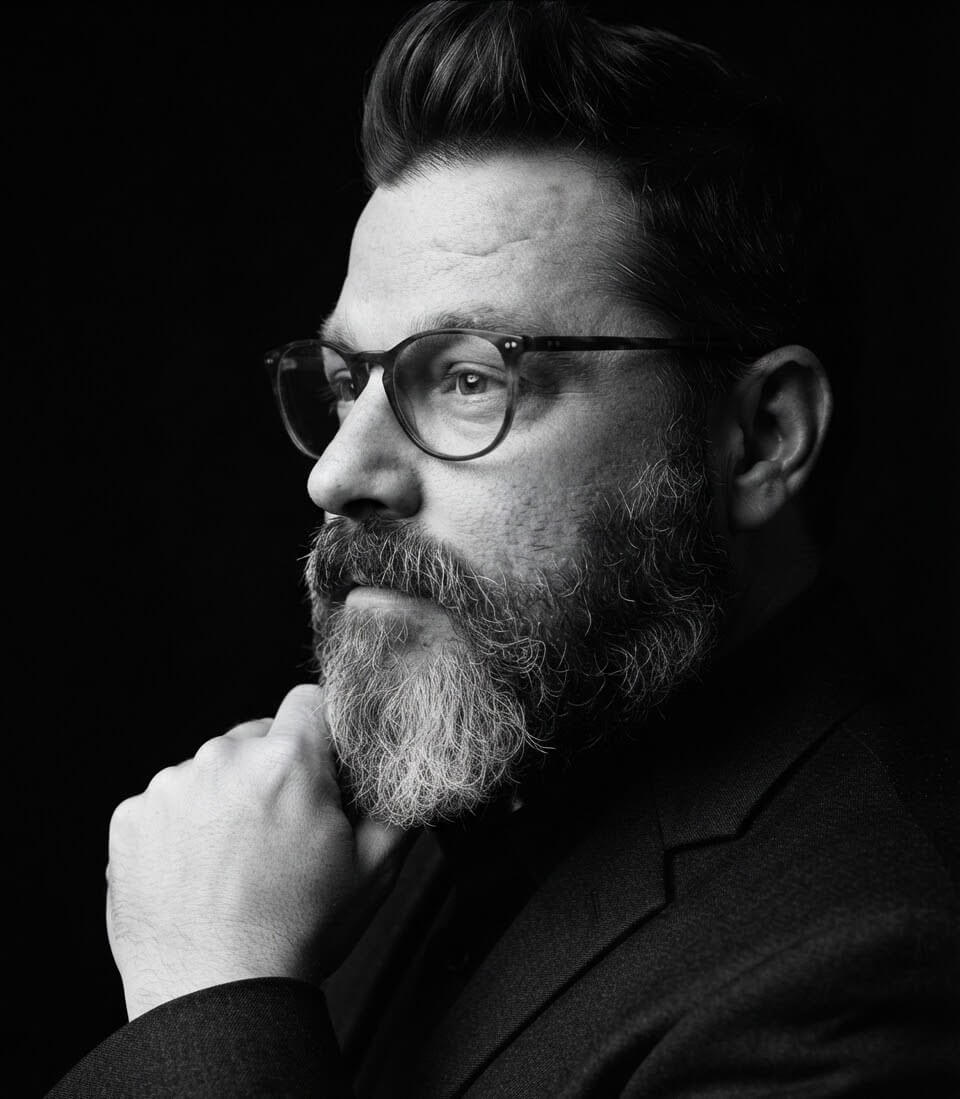
I’m the luckiest guy I know.
For over two decades,
Better systems, better experiences, better teams.
But it’s not just about improvement. It’s about leading people through uncertainty, identifying the right problems to solve, and building momentum that lasts.
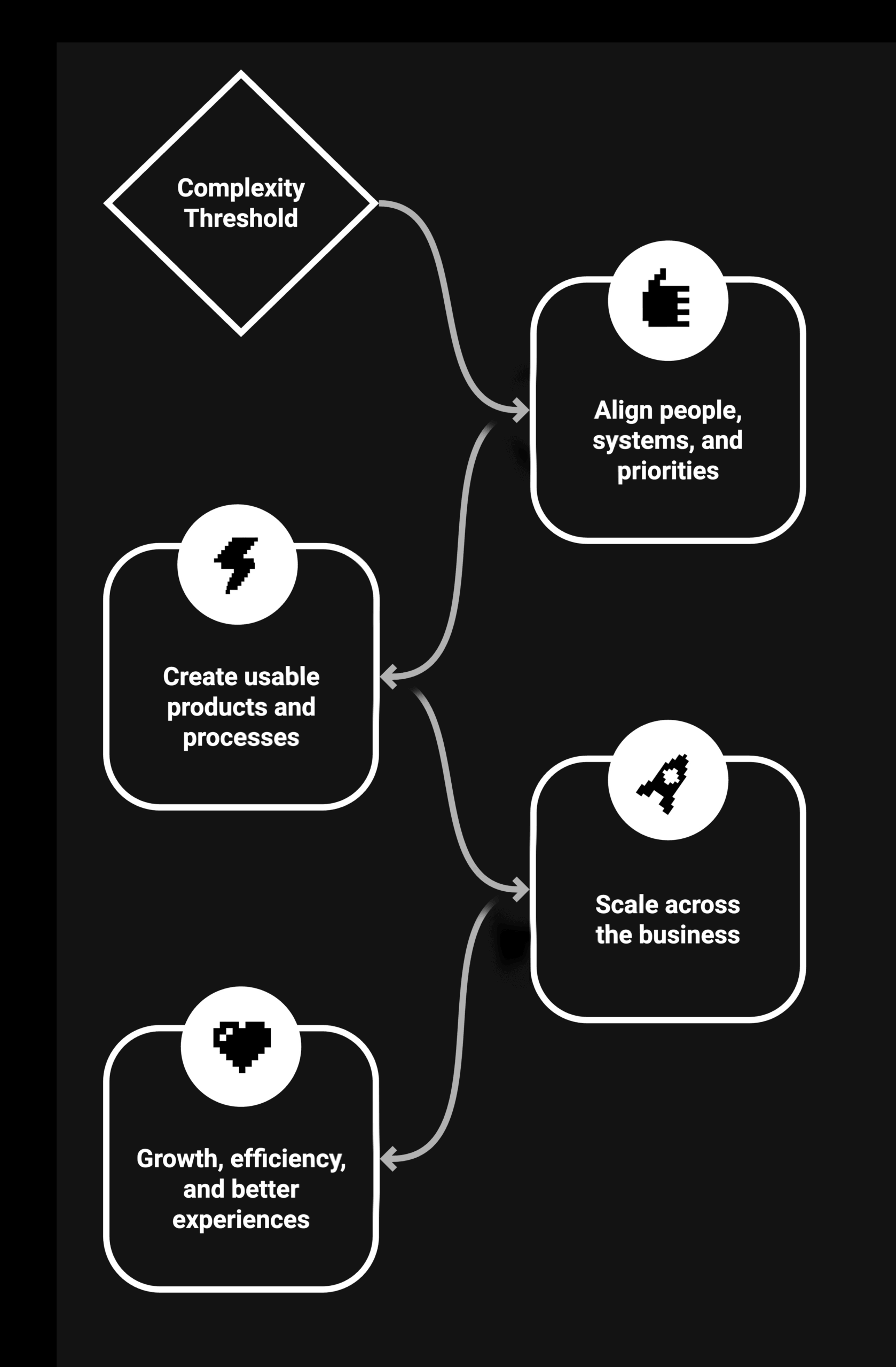
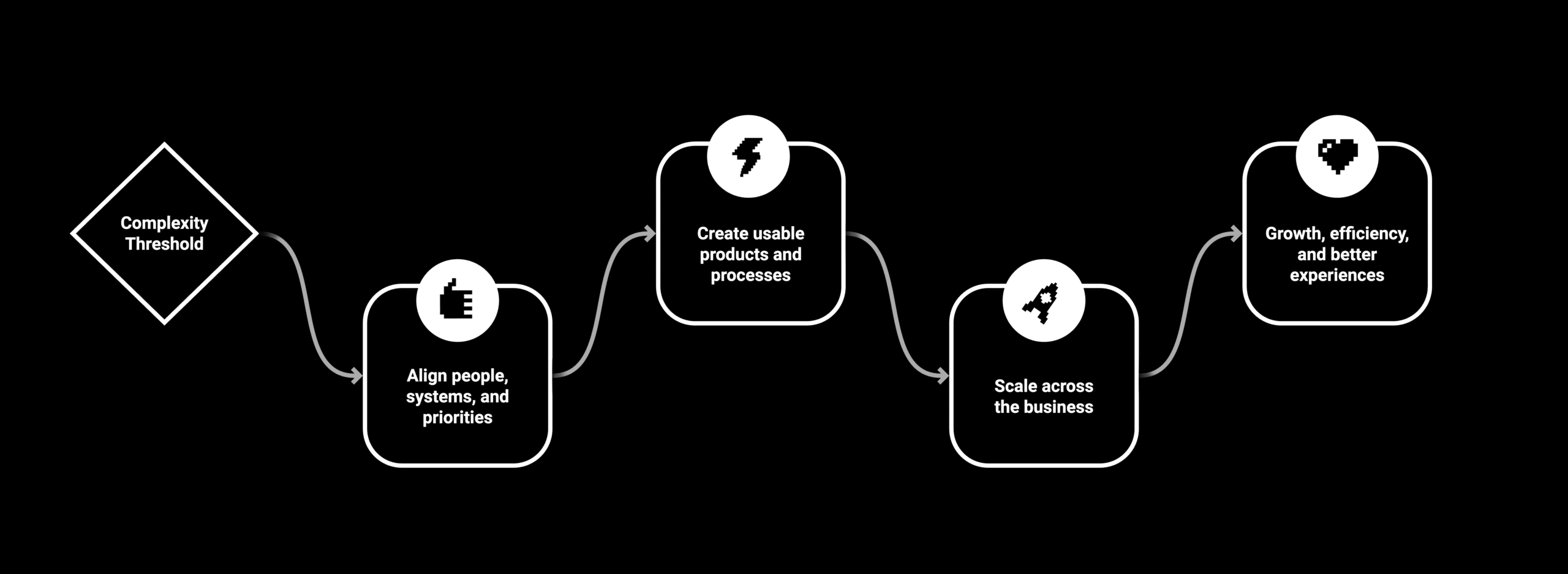
I tend to show up when organizations hit a complexity threshold…when systems start to strain, new technologies enter the mix, and teams struggle to align. That’s where I do my best work, leading organizations through moments of murkiness. I align teams, technology, and operations around better experiences, then build the products, platforms, and digital processes that allow those improvements to scale.
Whether it’s boats, batteries, or big box retail, I’ve helped launch new products, modernize platforms, and unlock billions in measurable impact. And after all that, I’m still energized by the chance to help organizations make more better.
That’s not luck exactly, but it sure feels like it.



Untangling complexity isn’t for everyone.
When technology, digital touchpoints, and embedded processes become knotted, experiences break down. Growth stalls. Revenue slips away. People work harder than they should.
Making it Better is complicated, messy work.
But I love it.
Process-Mobile
To Each Their Own
The best design speaks to the individual. Whether you’re reaching a luxury fashion buyer or a commemorative coin collector, you need to meet your user where they are. Communication is personal and experience solutions should be, too.
Remove the Friction
When businesses can create features that meet real needs in markets that are ready to receive them, solutions become more — they become better for everyone.
Clarity Beats Certainty
Teams don’t need all the answers—they need clear signals. I focus on direction over prescription, and alignment over control. When people understand the “why,” they’re far more equipped to define the “how.” My job is to create that clarity, especially in ambiguity, while correcting stray voltage, When teams have a strong alignment to the vision, their paths there will naturally find the best routes.
Context Matters
When designing, I always ask, “Why was it built this way?” Before removing a process or feature, you have to understand its original intent. Understanding the “why before the why” ensures progress doesn’t come at the cost of stability.
A History of Enabling Success























Fractional VP,
Product and Experience Strategy
2025 – Current
The Vision: What if every location could operate with the judgment of the ideal manager?
CieloVision had ambitious ideas for applying computer vision, AI, automation, and connected devices to physical environments. The opportunity was clear. The product, customer experience, and path to market were not.
I helped turn that emerging technology into understandable products and scalable customer experiences. That began with Intelligent Signage, using audience and environmental signals to make digital content more relevant, and continues toward Spatial Intelligence, a broader platform capable of understanding activity and orchestrating experiences across physical spaces.
My role connects what the market values, what the company builds, and how the product is explained and sold. I lead experience strategy, help prioritize the product roadmap against market fit and customer value, and define the sales narrative and go-to-market storytelling used to make the technology tangible to customers, partners, investors, and internal teams.
I also oversee the co-development of software with an external technology partner, aligning product requirements, experience quality, technical capabilities, and delivery priorities. This partnership is designed to accelerate CieloVision’s evolution from Intelligent Signage into a broader Spatial Intelligence platform without waiting to build every underlying capability independently.
The work extends beyond the interface. It includes how products are positioned, demonstrated, priced, sold, provisioned, supported, and improved. Concepts, storyboards, prototypes, demonstrations, and executive narratives align Product, Engineering, Revenue, Marketing, Operations, and Customer Success around a shared platform direction.
What Changed:
- Two market-ready solutions emerged from an ambiguous technology concept in under five months.
- Intelligent Signage became a defined commercial offering with a clear customer value proposition, sales narrative, and path to market.
- Product priorities became more closely tied to market fit, customer value, platform differentiation, and the company’s ability to deliver.
- A co-development partnership accelerated the software roadmap and created a more direct path from Intelligent Signage to Spatial Intelligence.
- Customer journeys connected account setup, provisioning, device management, content orchestration, automation, dashboards, and ongoing support.
- Sales narratives, use cases, prototypes, and demonstrations gave Revenue teams clearer ways to explain and sell emerging technology.
- Design-system principles and quality standards created consistency across responsive, light, and dark platform experiences.
- A new design function connected immediate product delivery to a longer-term platform vision.

Experience Strategy Consultant
2018 – Current
The Vision: What if digital experiences made the physical world easier to navigate?
Across airports, financial services, retail, and logistics, I worked with organizations whose customer experiences crossed physical spaces, digital products, service interactions, and internal operations.
My role was to expose the connections between those systems and define a clearer experience direction. That often meant moving beyond isolated touchpoints to examine the complete journey, the business model supporting it, and the organizational changes required to deliver it.
Selected Transformations:
- Created a physical-to-digital strategy for DFW Airport connecting wayfinding, shopping, dining, vendor promotion, and advertising opportunities.
- Helped shape Citi’s reimagined North American mobile banking experience around budgeting, financial guidance, and tiered services.
- Aligned experiences across FedEx’s physical locations, digital platforms, service messaging, and in-store interactions.


The Vision: What if every associate had the insight and time to anticipate what members need next?
Sam’s Club operated at enormous scale, but many of its customer and associate experiences were hamstrung by disconnected products, processes, systems, and organizational boundaries. Improving an interface was rarely enough…the underlying business operation often had to be reconsidered and remapped for a digital-first approach.
I built and led a product design organization of more than 25 people across five portfolios. Together, we shaped more than 30 products spanning member experiences, club operations, associate productivity, fulfillment, merchandising, pricing, finance, and enterprise infrastructure.
I also co-led the Sam’s Club Innovation Jam for four years, helping teams turn promising ideas into working concepts and multiple patents. Along the way, I was twice recognized with the Sam’s Club Making a Difference Award for cultural transformation and enterprise impact.
Success meant making complex work visible, understandable, and repeatable. Research, interaction design, service design, operational data, and business performance became shared inputs to product decisions. Design systems, accessibility standards, portfolio reviews, and quality practices helped improvements scale from early concepts into enterprise-wide capabilities.
What Changed:
- More than 30 zero-to-one products and platforms scaled across 600+ clubs, supporting 41,000 associates and 69 million members.
- Associate tools were streamlined from more than 70 applications and endpoints into five core experiences, enabling directed work, team accountability, operational feedback loops, and better member service.
- Club Concierge, created in response to COVID-19, evolved into a $3 billion BOPIS sales channel by connecting member orders, associate workflows, physical environments, and fulfillment operations.
- Frictionless Exit established a foundation for a fully digital club experience, using AI and computer vision to improve member eNPS by more than 30 points and contribute more than $200 million in savings.
- AI- and ML-powered workflows prevented more than 14 million errors and saved over 8,000 hours across Merchandising and Finance.
- Improved supplier accountability, tracking, and forecasting helped recover more than $100 million in promotional funding while strengthening merchant negotiations.
- Shared design systems and experience standards reached more than 70% of the organization.

UI + UX Director, Connected Devices
2017 – 2018
The Vision: What if a smartwatch felt like a watch first?
Fossil needed more than a smartwatch interface. It needed a connected product system that consumers would want and its portfolio of global brands would choose to fund, manufacture, and bring to market.
Product-market fit had to be established at both levels. The experience needed to meet consumer expectations for useful, wearable technology while giving each brand enough flexibility to preserve its identity and serve its own customers.
I directed product design and interface execution across proprietary smartwatch technology and Google Wear OS experiences. I led 5–8 designers and partnered with 10–20 engineers, working closely with Product, hardware teams, and brand leaders to translate customer needs, technical constraints, and brand requirements into production-ready software.
The work extended from product strategy and information architecture through navigation, notifications, health features, interaction behaviors, detailed specifications, implementation reviews, and final software delivery. Shared experience foundations allowed Fossil brands to create differentiated products without rebuilding the underlying technology for every launch.
What Changed:
- Created and launched a proprietary smartwatch operating experience that combined familiar watch behaviors with digital interfaces and connected features.
- Helped bring Fossil’s proprietary e-ink smartwatch technology toward production, contributing to technology later included in Google’s $40 million acquisition of Fossil smartwatch intellectual property.
- Earned buy-in from brands across the Fossil portfolio, securing the internal commitment and production funding required to bring connected products to market.
- Established reusable interaction patterns across watch hardware, embedded software, mobile applications, APIs, and cloud services.
- Enabled individual brands to create distinct connected experiences on top of a shared product and technology foundation.
- Aligned Product, Design, Engineering, Hardware, Marketing, and Brand teams so that product capabilities were accurately executed and represented across devices, applications, packaging, retail, and campaigns.

UI + UX Manager
2013 – 2017
The Vision: What if every interaction with a brand felt like part of the same experience?
I shaped omnichannel commerce experiences across customer acquisition, purchase, fulfillment, service, and re-engagement. The work connected digital platforms with physical touchpoints to create more consistent customer journeys for global brands and organizations including Procter & Gamble, Gillette, Tide, Dooney & Bourke, Heineken, Funimation, Canada Goose, and the United States Mint.
Working with teams of 3–6 UX designers, I helped create ecommerce platforms, subscription models, operational dashboards, customer-engagement programs, and digital-to-physical experiences tailored to different brands, customers, and business models.
But delivering individual programs was only part of the opportunity. Every custom implementation exposed patterns that could be reused to make the next program faster and more predictable.
I led the creation of a reusable Salesforce Commerce Cloud foundation that combined proven experience patterns, design components, technical capabilities, and implementation practices. This gave brands a reliable starting point while preserving the flexibility needed to create differentiated customer experiences.
Procter & Gamble used the platform to build, test, and launch 11 new ecommerce implementations, each in fewer than six weeks. This reduced overall execution time by 50% and cut design implementation time by more than 70%, to fewer than 90 hours per initiative.
The United States Mint became another defining example of the work. We modernized a high-volume public ecommerce platform supporting more than $450 million in annual revenue, with peak sales days exceeding $50 million. The experience had to balance trust, accessibility, scalability, and operational reliability under extraordinary demand.
What changed
- Transformed repeatable commerce patterns into a scalable Salesforce Commerce Cloud delivery foundation.
- Procter & Gamble launched 11 new ecommerce implementations in fewer than six weeks each.
- Overall implementation time decreased by 50%.
- Design implementation time fell by more than 70%, to fewer than 90 hours per initiative.
- Global brands gained faster delivery without sacrificing their individual identities, customer needs, or business models.
- The United States Mint gained a modernized commerce experience capable of supporting more than $450 million in annual revenue and peak sales days exceeding $50 million.
